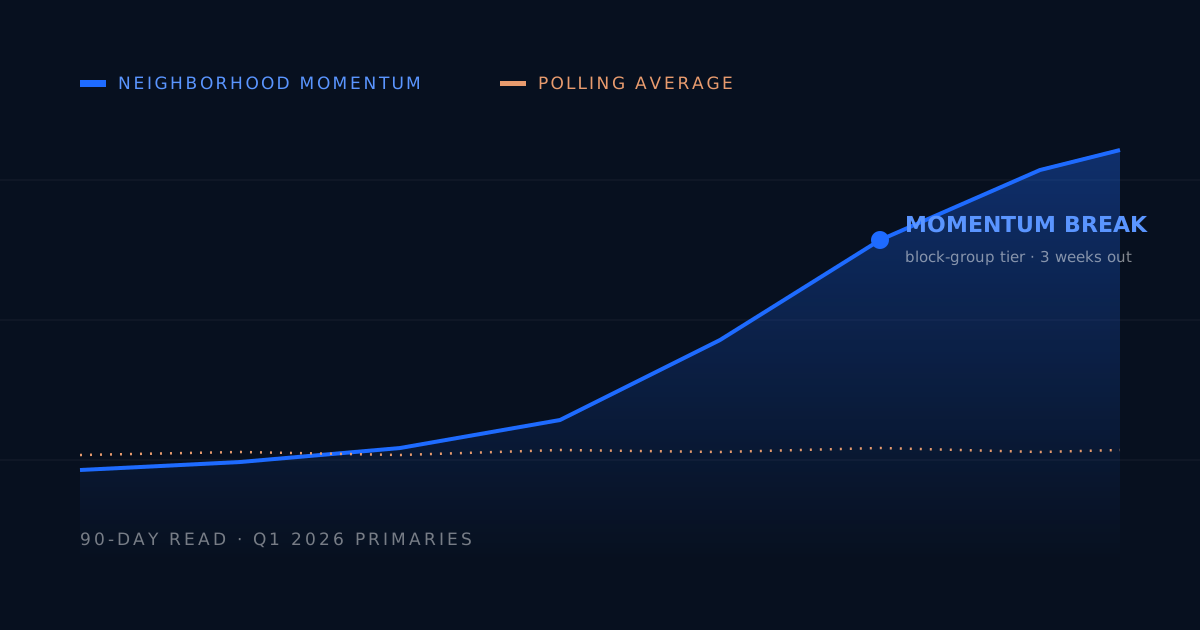
Polls tell you where opinion stood. They are designed to. The question every operator we work with asks is a different one: where is opinion moving, and at the resolution where money and time actually get allocated?
This is a short read on three Q1 2026 primaries where the answers diverged.
The pattern
In each of the three races, the public polling average sat within the margin of error a week before the primary. The Pharos neighborhood-resolution momentum signal had already broken at the Census Block Group tier. The races did not surprise the model.
What looks like volatility at the topline reads as durable, geographically concentrated movement at the block-group tier. The race intelligence catches it because the resolution catches it.
What this means for operators
If you are running a race, a ballot committee, or a policy fight that depends on geographically concentrated turnout, polling cannot be the only instrument on the dashboard. It is necessary. It is not sufficient.
The pattern is consistent. The races where momentum and polling agree are the easy calls. The races where they diverge are the ones that get won and lost on whether you noticed.
Where we go next
Q2 will test the pattern against three more environments: a federal special, a statewide ballot question, and a coordinated activation case across four contiguous markets. We will publish the post-mortems here.
Subscribe below for the Q2 read.